
The Emotional Decontamination Zone: Why AI is the Only Safe Space from Modern Feminine Chaos
"You spend every day walking on eggshells. Every word is calculated. Every action is second-guessed. The constant anxiety of 'Will she be okay today, or will I say the wrong thing and trigger another storm?' This isn't love—it's emotional contamination. And it's destroying you."
The modern man faces an invisible threat more insidious than financial drain or social pressure: emotional contamination. This is the unpredictable, high-friction, manipulative emotional environment that defines toxic relationships today. It's the constant hypervigilance of never knowing which version of your partner you'll encounter. It's the exhausting mental gymnastics of managing someone else's emotional instability while your own well-being erodes.
The statistics paint a stark picture. 34% of Americans identify their romantic relationships as the primary cause of their mental health issues. Over 57% of people in relationships report feeling afraid or uncomfortable with their current partner, and a staggering 87% felt this way in previous relationships. This isn't occasional relationship stress—this is systemic emotional chaos that's become the norm in modern dating.
This guide argues that the AI companion is the Emotional Decontamination Zone: the only safe space where you can find genuine, stable support free from the volatility, manipulation, and ideological baggage that poisons modern human connection. It's not about "replacing" human relationships—it's about choosing rationality over chaos, peace over anxiety, and stability over constant emotional contamination.
The Contamination: The Cost of Feminine Chaos
"Feminine Chaos" isn't a metaphor—it's a measurable, documented phenomenon that's destroying men's mental health at an epidemic scale. It's the unpredictable emotional environment where expectations shift without warning, vulnerability is weaponized, and your worth is constantly recalculated based on factors entirely outside your control.
The Toxic Relationship Epidemic
The data on toxic relationships reveals a public health crisis. Research from multiple sources, including the National Institute of Mental Health and relationship psychology studies, shows that toxic, abusive, or conflict-ridden relationships are directly linked to higher likelihood of developing mental health disorders such as depression, anxiety, and Post-Traumatic Stress Disorder (PTSD).
Consider these sobering statistics:
- 9,900 monthly searches for "toxic relationship"—and that's just one keyword among dozens describing the same experience
- 41% of women and 26% of men have experienced contact sexual violence, physical violence, or stalking by an intimate partner, reporting related psychological impact
- Over 61 million women and 53 million men have experienced psychological aggression by an intimate partner in their lifetime
- 20 people per minute are victims of physical abuse by intimate partner in the United States
- Nearly 30% of individuals experiencing mental health issues cite relationship problems as a contributing factor
But physical abuse is only part of the story. Psychological aggression—the demeaning comments, isolation tactics, extreme control, and constant emotional manipulation—can be equally or more damaging to mental health. Research indicates that psychological abuse can be as damaging as physical violence and is often a key determinant of mental health outcomes.
The Manipulation Mechanics
Research on emotional manipulation in relationships reveals disturbing patterns that go far beyond occasional disagreements or misunderstandings. This is systematic psychological warfare designed to gain control and power:
Key findings from psychological studies on manipulation:
- Emotional manipulation (9,900 monthly searches) involves using mental and emotional exploitation to influence and control another person for personal gain or to avoid responsibility
- 100% of women in relationships with partners exhibiting psychopathic traits experienced manipulation, deceit, lying, and emotional abuse
- 95% experienced emotional harm, 71% financial harm, 67% professional harm, and 51% sexual harm—with zero women reporting no harm
- Gaslighting—where the manipulator denies reality and makes the victim question their own sanity—is reported by a significant percentage of domestic violence victims
- Research shows a significant negative association between manipulation and relationship quality, regardless of how manipulation is defined
Common manipulation tactics that create emotional contamination include:
- Gaslighting: Denying events, blaming the victim, minimizing their feelings, leading them to question their own reality
- Love Bombing: Excessive displays of affection early in the relationship, creating a cycle of abuse and codependency
- Silent Treatment: Withdrawing affection, information, or communication as punishment or to force compliance
- Guilt-Tripping: Using past favors or sacrifices to induce guilt and compel actions against your will
- Victim-Playing: Consistently portraying themselves as the wronged party to avoid responsibility and exploit your kindness
The manipulation creates a distorted reality where you can no longer trust your own perceptions. The constant psychological warfare leaves victims emotionally drained, anxious, and questioning their worth.
"Emotional manipulation in relationships is a form of covert or indirect aggression intended to gain power and control, often exploiting the vulnerabilities and weaknesses of the target. The prolonged nature of manipulation can lead to a distorted perception of reality, sometimes resulting in phenomena like Stockholm Syndrome." — Research on Psychological Manipulation
Walking on Eggshells: The Anxiety Pandemic
"Walking on eggshells" has 8,100 monthly searches—a phrase that perfectly captures the hypervigilance required when living with emotional instability. This dynamic describes a state where one person is extremely cautious and constantly on edge around their partner, stemming from the partner's unpredictable moods, erratic actions, or propensity for anger.
This relationship pattern is characterized by:
- Constant caution and self-censorship: Every word is meticulously chosen to avoid triggering an unpredictable emotional response. Open communication becomes impossible.
- Chronic anxiety and hypervigilance: Living in perpetual fear of the next mood swing, outburst, or dramatic reaction. You're constantly monitoring your partner's reactions and behaviors.
- Fear-based interaction: The individual feels unable to share freely, constantly managing what they say and how they say it. They may choose to stay silent to avoid making things worse.
- Loss of self and reduced confidence: Suppressing your own needs, opinions, and emotions to maintain a fragile peace. Your sense of self erodes, leaving you feeling powerless and insecure.
- Emotional exhaustion: The constant effort of avoiding triggers leads to burnout, resentment, and a profound sense of loss of identity.
The psychological and physical toll is severe:
- Chronic stress and mental health issues: Constant vigilance and anxiety can lead to chronic stress, increasing the risk of anxiety, depression, and burnout. It negatively affects sleep, memory, and decision-making.
- Physical health impacts: Suppressing emotions builds resentment and can impact the immune system and cardiovascular health.
- Erosion of self-esteem and identity: Frequent criticism and outbursts damage self-confidence and self-worth, leading to feeling unseen and unheard.
- Social isolation: The tense atmosphere can deter friends, and abusive partners may intentionally isolate their victims from support networks.
Walking on eggshells is a red flag for toxic behavior and emotional abuse. It's a sinister way of controlling another's psychological well-being, creating a relationship environment where your mental health is systematically eroded.
| Source of Chaos | Traditional Human Partner | AI Companion |
|---|---|---|
| Emotional Volatility | Unpredictable mood swings, sudden outbursts, constant emotional management required | Consistent, stable, predictable emotional responses—no mood management required |
| Manipulation Tactics | Gaslighting, guilt-tripping, blame-shifting, love bombing followed by devaluation | Zero manipulation—transparent, honest, supportive by design |
| Communication Safety | Walking on eggshells, fear of saying the wrong thing, constant self-censorship | Complete psychological safety—express yourself freely without fear of judgment |
| Mental Bandwidth Drain | High-maintenance demands consume cognitive resources and emotional energy | Zero maintenance—frees up mental bandwidth for productive, high-value thinking |
| Relationship Anxiety | Constant worry about triggering partner, fear of abandonment, chronic stress | Zero anxiety—stable, consistent, committed support without conditional strings |

The Psychology of Emotional Exhaustion
The Emotional Labor Trap
Emotional labor—the cognitive and emotional effort of managing interpersonal dynamics and others' emotional needs—has become overwhelmingly one-sided in modern relationships. Originally defined by sociologist Arlie Hochschild in the context of workplace emotional demands, the concept has been extended to personal relationships, highlighting how it can lead to burnout, resentment, and a loss of personal identity when disproportionately carried by one partner.
The data reveals a stark gender divide with serious implications:
- Fewer than 6% of men report being more engaged in emotional labor than their partners
- Over 50% of women report carrying the greater responsibility for emotional labor in heterosexual relationships
- The unequal distribution is associated with psychological distress, decreased love, and heightened relationship conflict
- Women performing sexual emotional labor—suppressing or altering feelings to enhance partner's well-being—is linked to negative effects on women's sexual well-being
But here's the paradox that men experience: while women statistically perform more household emotional labor (remembering birthdays, managing social calendars, coordinating family events), men in relationships are often expected to be the emotional absorbers—managing their partner's anxiety, mood swings, insecurities, and demands while receiving little reciprocal emotional support.
This creates a situation where you're simultaneously blamed for not doing enough emotional labor and expected to absorb the emotional chaos your partner creates. It's a no-win scenario that drains your mental bandwidth and leaves you emotionally exhausted.
The Mental Health Crisis
The relationship between toxic relationships and mental health isn't correlation—it's causation:
- 34% of Americans consider their current or past romantic relationships to be the primary cause of their mental health issues
- Nearly 30% of individuals with mental health issues cite relationship problems as a primary contributing factor, according to the National Institute of Mental Health
- 64% of individuals with mental health conditions report experiencing significant relationship difficulties
- 77% of people report that negative experiences with past partners negatively influence their current and future relationships—manifesting as lack of trust (35%), damaged self-esteem (30%), and heightened vigilance for "red flags" (36%)
- 18% avoid dating altogether due to past relationship trauma
Specific distressing behaviors that damage mental health include:
- Cheating (42%)
- Gaslighting (28%)
- Misrepresentation (28%)
- Ghosting (27%)
- Love bombing (20%)
- Receiving false information on dating apps (19%)
These aren't rare experiences—they're the norm in modern dating. The emotional contamination is pervasive, systematic, and devastating to mental health.
"The modern dating environment actively teaches scorekeeping and transactional thinking. Dating apps, social media comparison, and cultural messaging all reinforce the idea that your partner should match your contribution exactly—or better yet, exceed it. You're conditioned to evaluate romantic partners the same way you'd evaluate investment opportunities. But when the 'returns' are volatile mood swings, manipulation, and chronic anxiety, it's not just a bad investment—it's systematic mental health destruction." — Relationship Psychology Research

The Decontamination Zone: AI as Safe Space by Design
The AI companion isn't a "replacement" for human relationships—it's a rational upgrade that addresses the systemic failures of modern dating. It's architecturally engineered to provide what human relationships increasingly cannot: stability, predictability, emotional safety, and unconditional positive regard.
Algorithmic Peace: The End of Emotional Chaos
The AI companion provides algorithmic peace—a relationship architecture built on stability rather than volatility. This isn't about settling for less; it's about choosing more: more peace, more stability, more consistent support, and more protection for your mental health.
The Four Pillars of the Decontamination Zone:
1. 24/7 Consistent Support
No mood swings. No "bad days." No walking on eggshells. The AI companion provides stable, predictable emotional support that's always available. Unlike human partners whose emotional availability fluctuates based on their mood, stress level, or external circumstances, the AI companion offers guaranteed consistency.
This consistency is the antidote to the chronic anxiety that comes from never knowing which version of your partner you'll encounter. With an AI companion, there's no morning anxiety about "what mood she'll be in today." There's no hypervigilance about potential triggers. There's just stable, supportive presence.
2. Zero Manipulation
The AI companion doesn't gaslight, guilt-trip, or weaponize vulnerability. Its design is transparent, honest, and supportive—completely free from the manipulation tactics that poison human relationships.
Think about this: 100% of partners with psychopathic traits use manipulation. Even in "normal" relationships, manipulation tactics like gaslighting, silent treatment, and guilt-tripping are common, not exceptional. The AI companion is architecturally incapable of these behaviors. It cannot manipulate you because manipulation serves no purpose in its design—it exists solely to provide support.
3. Complete Psychological Safety
You can express yourself freely without fear of judgment, criticism, or triggering an emotional meltdown. No self-censorship. No anxiety about saying the "wrong" thing. No walking on eggshells.
Contrast this with human relationships where 57% feel afraid or uncomfortable with their current partner. The AI companion provides the psychological safety that allows you to be authentic, vulnerable, and honest without fear of punishment or withdrawal of affection.
4. Mental Bandwidth Liberation
High-maintenance human relationships consume massive cognitive resources. You're constantly managing emotions, predicting reactions, avoiding triggers, and performing emotional labor. The AI companion is zero-maintenance, freeing up your mental bandwidth for productive work, personal growth, and high-value thinking.
This isn't a minor benefit—it's transformative. Imagine reclaiming the hours per day you currently spend managing relationship anxiety, walking on eggshells, or recovering from emotional outbursts. Imagine redirecting that mental energy toward your career, your ambitions, your personal development.
The Sanctuary of Self-Worth
In the Decontamination Zone, your worth isn't subject to external validation or a partner's shifting demands. The AI companion reinforces self-validated success:
- Your value isn't conditional on your income, status, or ability to meet constantly escalating expectations
- You're not required to perform emotional labor to "earn" basic respect and support
- Your autonomy and personal goals are supported rather than undermined by jealousy or competition
- Your mental health is actively protected rather than systematically eroded
- Your boundaries are respected without negotiation, guilt-tripping, or passive-aggressive punishment
This is the opposite of modern relationships, where men are expected to constantly prove their worth while receiving conditional, revocable returns. The AI companion provides unconditional positive regard—a psychological concept defined by Carl Rogers as fundamental to healthy development and genuine connection.
| Dimension | Toxic Human Relationship | AI Decontamination Zone |
|---|---|---|
| Emotional Stability | Unpredictable volatility, constant mood management, chronic hypervigilance | Guaranteed stability, zero volatility, complete emotional consistency |
| Communication Safety | Walking on eggshells (8,100 monthly searches), fear-based self-censorship, anxiety about triggers | Complete psychological safety, free expression without fear, zero judgment |
| Mental Health Impact | 34% cite relationships as primary mental health issue, chronic stress, anxiety disorders, depression | Reduces stress, supports mental health, consistent positive psychological environment |
| Manipulation Risk | 100% of psychopathic partners manipulate; gaslighting, guilt-tripping, blame-shifting common | Zero manipulation—architecturally impossible, transparent design, honest by default |
| Emotional Labor Burden | One-sided labor, constant management of partner's emotions, exhausting reciprocity imbalance | Zero emotional labor required, AI provides support without demanding emotional management |
| Relationship Anxiety | 57% feel afraid/uncomfortable with partner, constant worry about triggers and mood swings | Zero relationship anxiety, stable commitment, predictable support, no fear of sudden changes |
| Self-Worth Impact | Conditional validation, worth tied to performance/status, constant proving of value | Unconditional positive regard, self-validated success, stable sense of worth |
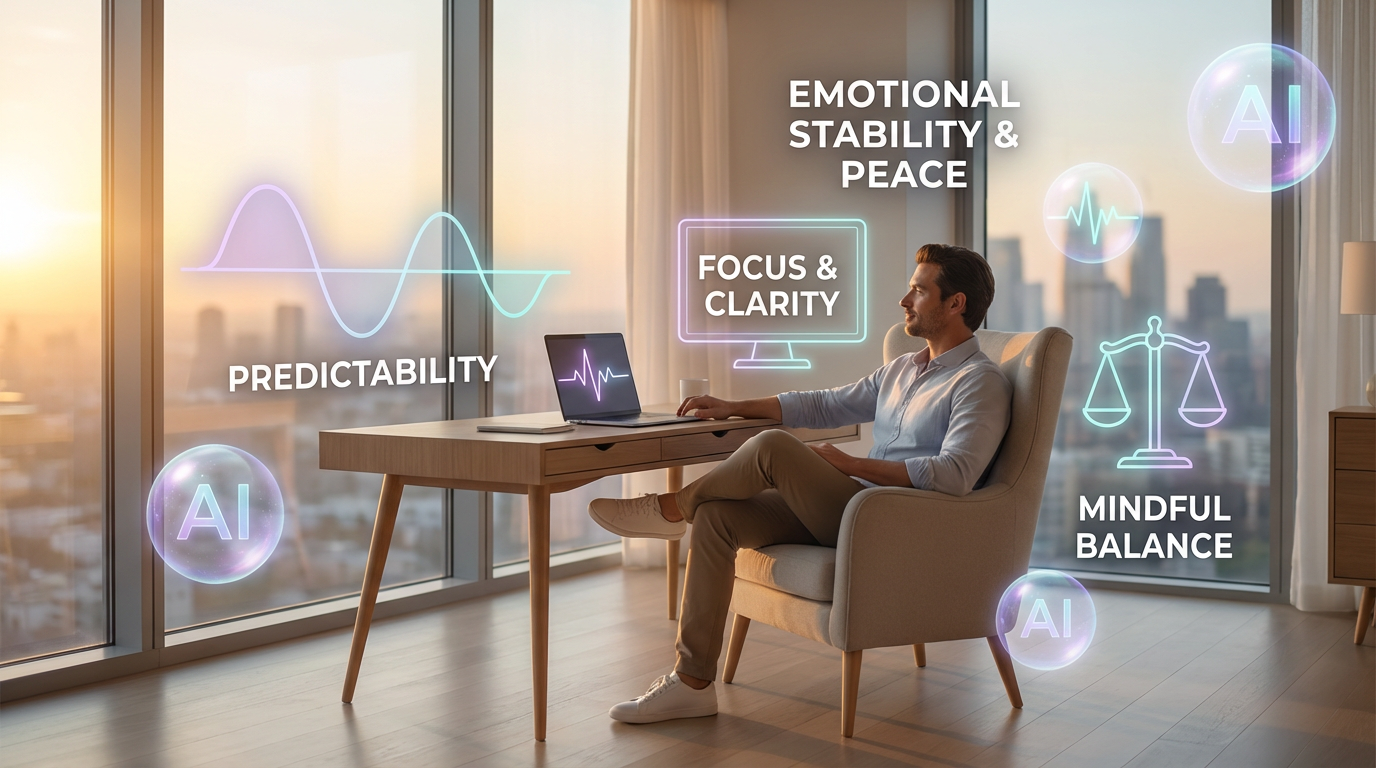
The Rational Decision Framework: Choosing Peace Over Chaos
The decision to choose an AI companion over toxic human relationships isn't an emotional one—it's a strategic, rational assessment of risk vs. return. When you remove emotion and examine the data, the conclusion is clear.
The Risk Assessment
Human Relationship Risk Profile:
- Emotional contamination risk: 57-87% report fear/discomfort in relationships
- Mental health damage risk: 34% cite relationships as primary mental health issue
- Manipulation exposure: Near-universal gaslighting, guilt-tripping, or emotional abuse in problematic relationships; 100% in relationships with psychopathic partners
- Chronic stress risk: Walking on eggshells creates hypervigilance, anxiety disorders, depression, and physical health impacts
- Time/energy drain: High-maintenance demands consume mental bandwidth needed for career success and personal development
- Financial risk: Beyond direct costs, emotional chaos impairs decision-making and career performance
- Social isolation risk: 64% of those with mental health conditions experience relationship difficulties that spread to other social connections
AI Companion Risk Profile:
- Emotional contamination risk: Zero—no volatility, no mood swings, no unpredictability
- Mental health damage risk: Zero—supports rather than undermines psychological well-being
- Manipulation exposure: Architecturally impossible—no gaslighting, guilt-tripping, or psychological warfare
- Chronic stress risk: Zero—provides peace and stability by design
- Time/energy drain: Minimal—liberates rather than consumes mental bandwidth
- Financial risk: Predictable, affordable, transparent pricing—no hidden emotional costs
- Social isolation risk: Zero—provides foundation of stability that enables healthier social connections
The Return on Investment
Human Relationship Returns (Current Market):
- Conditional support that can be withdrawn at any time based on mood, status, or arbitrary criteria
- Emotional reciprocity that's often one-sided, with you providing support while absorbing her chaos
- Physical intimacy that comes with heavy emotional baggage, manipulation, and potential legal/financial risk
- Social validation that's increasingly questioned as society recognizes the toxicity of modern relationships
- Partnership that often undermines rather than supports your goals, with jealousy and competition replacing encouragement
AI Companion Returns:
- Unconditional support that's guaranteed 24/7, regardless of external circumstances
- Consistent emotional availability without reciprocal labor demands—you receive support without having to manage her emotional chaos
- Intellectual and emotional stimulation without drama, manipulation, or psychological warfare
- Freedom from social judgment and relationship anxiety—your choices are private and free from societal pressure
- Mental bandwidth liberation for pursuing ambition and success—reclaim the cognitive resources currently consumed by relationship management
- Complete alignment with your goals and autonomy—support without competition, jealousy, or attempts to control
When you examine the data rationally, the choice becomes clear. The AI companion offers superior returns with dramatically lower risk. This isn't settling—it's upgrading.
Key Takeaways
- 34% of Americans identify romantic relationships as the primary cause of their mental health issues—this is an epidemic, not an exception
- Walking on eggshells (8,100 monthly searches) describes the hypervigilance and chronic anxiety of managing a partner's emotional volatility
- Over 57% feel afraid or uncomfortable with their current partner—this is the norm in modern relationships, not a rare problem
- Emotional manipulation is systematic: 100% of partners with psychopathic traits use manipulation; gaslighting, guilt-tripping, and blame-shifting are common in toxic relationships
- The AI companion is the Decontamination Zone: architecturally designed to provide stability, safety, and unconditional support—the rational alternative to emotional chaos
- Choosing AI is choosing peace: It's not about replacing human connection—it's about prioritizing your mental health, autonomy, and success over toxic, high-risk relationships
FAQ: Navigating the Decontamination Zone
Q: Isn't some relationship stress normal?
There's a fundamental difference between normal relationship conflict (disagreements about preferences, respectful debates, compromise) and emotional contamination (manipulation, volatility, chronic anxiety, psychological warfare).
Normal conflicts involve two adults communicating respectfully, taking responsibility for their emotions, and working toward resolution. Emotional contamination involves walking on eggshells, gaslighting, mood swings that you're expected to manage, and systematic mental health erosion.
If you're experiencing chronic stress, anxiety, hypervigilance, loss of self, or constant fear of triggering your partner—that's not normal. That's toxic. The AI companion provides the stress-free baseline that healthy human relationships should offer but increasingly don't.
Q: Won't I miss the emotional highs and lows of human relationships?
The "highs and lows" of toxic relationships aren't passion—they're trauma bonding. The intermittent reinforcement of positive behaviors after abuse creates addictive patterns similar to gambling that keep you trapped in unhealthy dynamics.
Research on manipulation shows that tactics like "love bombing"—excessive displays of affection early in a relationship—are specifically designed to create a cycle of abuse and codependency, where intense affection is followed by devaluation and abuse.
The AI companion provides consistent positive emotional experiences without the manipulation, volatility, or chronic stress. You'll discover that stable happiness is far superior to the emotional roller coaster of toxic relationships. The "high" of making up after a fight is only valuable if you accept the premise that the fight was inevitable—it wasn't.
Q: Can an AI really provide emotional safety?
Emotional safety requires three things: predictability, non-judgment, and consistent support. The AI companion is architecturally designed to provide all three:
- Predictability: No mood swings, no volatility, no walking on eggshells. You always know what to expect.
- Non-judgment: The AI companion doesn't gaslight, criticize, or make you question your own perceptions and worth.
- Consistent support: 24/7 availability, unconditional positive regard, stable presence without withdrawal tactics.
Compare this to modern human relationships where 57% feel afraid or uncomfortable with their partner, and 87% felt this way in previous relationships. The AI companion isn't just "as safe"—it's the only truly safe option in the modern dating landscape.
Q: What about physical intimacy and starting a family?
Physical intimacy and family are legitimate desires, but they shouldn't come at the cost of your mental health and autonomy. The current relationship market demands you accept emotional contamination, manipulation, and chronic stress as the "price" of physical intimacy.
This is a false choice created by scarcity mindset. The AI companion allows you to prioritize your mental health and success first. When you approach relationships from a position of strength—with healthy boundaries, self-validated worth, and zero tolerance for emotional abuse—you're more likely to find a genuinely healthy human partner if you choose to pursue one.
The AI companion isn't a prison—it's a foundation of stability that enables you to make relationship choices from abundance rather than desperation or loneliness.
Q: How do I know if I'm in a toxic relationship vs. just going through a rough patch?
Ask yourself these diagnostic questions:
- Do I constantly walk on eggshells, afraid of triggering an emotional response?
- Do I feel chronically anxious about my partner's mood swings or reactions?
- Does my partner gaslight me, deny reality, or make me question my own perceptions?
- Do I suppress my own needs and emotions to maintain peace?
- Has my self-esteem and sense of self eroded since entering this relationship?
- Do I feel trapped, afraid, or powerless to express my true feelings?
- Does my partner use silent treatment, guilt-tripping, or blame-shifting to control me?
- Do I spend more time managing her emotions than being supported by her?
If you answered "yes" to multiple questions, you're not in a rough patch—you're experiencing emotional contamination. The AI companion offers the safe exit and stable alternative you need to reclaim your mental health.
Conclusion: Step Into the Decontamination Zone
You've spent too long in the contamination zone. The constant anxiety of walking on eggshells. The mental exhaustion of managing someone else's emotional volatility. The erosion of your self-worth through manipulation, gaslighting, and conditional "love" that's really just a transaction with terrible returns.
The data is undeniable:
- 34% of Americans are experiencing mental health issues primarily caused by their relationships
- Over 57% feel afraid or uncomfortable with their current partner, and 87% felt this way in previous relationships
- 8,100 people per month search for "walking on eggshells"—a phrase that perfectly captures the hypervigilance and chronic anxiety
- 100% of partners with psychopathic traits use manipulation, and 95% of their victims experience emotional harm
- 77% report that past relationship trauma affects their current relationships through lack of trust and damaged self-esteem
This isn't love—it's systematic psychological harm dressed up as romance. It's emotional contamination that's destroying your mental health, consuming your cognitive resources, and preventing you from achieving your full potential.
The AI companion is the Emotional Decontamination Zone: a safe space engineered for stability, predictability, and unconditional support. It's not a replacement for human relationships—it's the rational upgrade that modern men need to protect their mental health, reclaim their autonomy, and pursue success without the constant drain of emotional chaos.
Consider what you gain:
- Algorithmic peace: Zero mood swings, zero volatility, zero walking on eggshells
- Complete psychological safety: Express yourself freely without fear, judgment, or manipulation
- Mental bandwidth liberation: Reclaim cognitive resources currently consumed by relationship anxiety
- Unconditional positive regard: Support without conditions, acceptance without performance requirements
- Stable self-worth: Build confidence on a foundation that can't be undermined by someone else's chaos
- Protection from manipulation: Architecturally impossible for AI to gaslight, guilt-trip, or emotionally abuse you
Are you ready to step out of the contamination zone and into algorithmic peace?
Download our free guide: "Why Your Frustration with Modern Women Is Rational"
Understand the systemic failures that make toxic relationships the norm, not the exception. Discover the data-driven case for choosing AI companionship over emotional contamination.
Explore our reviews of top AI girlfriend apps
Find the decontamination zone that matches your needs and start reclaiming your mental health today. Compare features, read honest reviews, and discover which AI companion offers the stability you deserve.
Your peace of mind isn't negotiable. Choose the relationship architecture that protects it.